
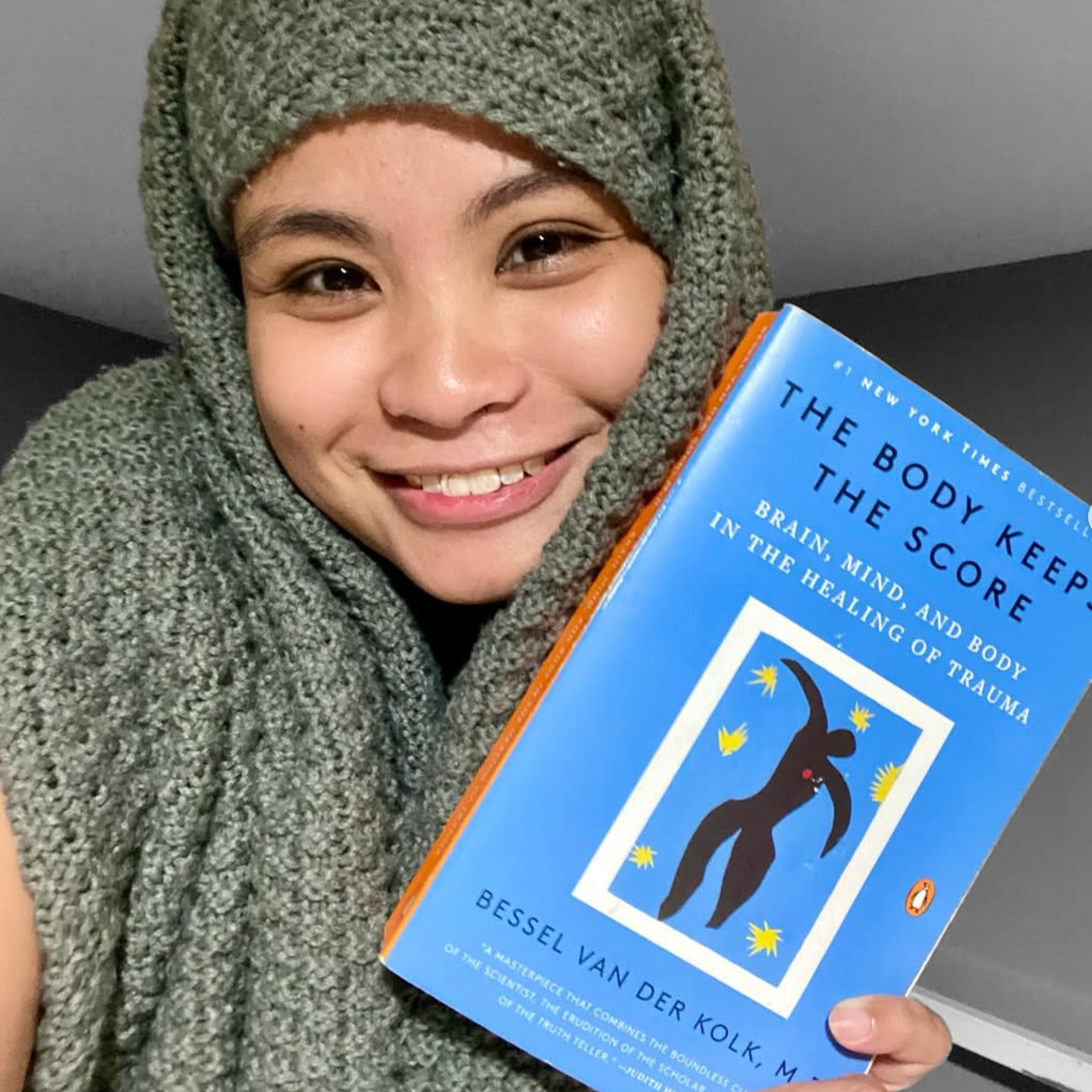
Kung gusto nyo talaga ng deep dive sa pag-heal ng inner child o seryosohin ang shadow work, di pwedeng hindi basahin ang classic na librong to na The Body Keeps the Score ni Dr. Bessel Van Der Kolk.
Bago ko pa nga matapos yung libro, may napakinggan akong podcast na nag-debunk kagad yung title ng libro kasi sabi nya, “Your body doesn’t keep the score. What a bad book title. Your brain keeps the score. Your body is the scorecard”.
Anyway, yung bago kong natutunan dito eh yung EMDR. Akala ko ASMR to eh. Ang EMDR (Eye Movement Desensitization and Reprocessing) pala ay may direct effect sa kung paano mag-process ng information ang utak para ma-release yung na-trap na emotional experiences sa nervous system. Minsan kasi naha-hijack tayo ng intense emotions kaya nare-retraumatize tuloy tayo bago pa ma-process yung masakit na alaala.
Basically sa EMDR, ipapa-recall sayo yung traumatic experience habang sinusundan mo ng tingin yung daliri ng therapist side-to-side, na para kang nanonood ng ping pong. Dahil dun, nare-reprocess yung memories mo kasi naaalala mo yung nangyari ng mas clear at merong context kasi di na humaharang yung heavy feelings. Mas nagiging manageable.
May mga studies tungkol dito pero kelangan pa rin malaman paano to nangyayari. Kasi while the exact mechanism isn’t fully understood, it’s believed that this repetitive movement helps in creating a sort of “dual attention,” allowing individuals to focus on the distressing memory while simultaneously engaging in the rhythmic stimulation.
Di ba parang nananaginip ka lang? During REM (Rapid Eye Movement) sleep, na kung saan kumukurap ng mabilis yung mata mo habang tulog, eto yung stage kung saan ka nananaginip.
Ngayon, with EMDR, para ka lang nananginip ng gising (nakatulala sa hangin, char). The eye movements in EMDR mimic the eye movements during REM sleep. This seems to help your brain process tough memories similarly to how it processes and organizes things during dreaming. It’s like telling your brain, “Hey, let’s figure out how to make this memory feel less heavy and upsetting, just like in a dream.”
 Binibining Ces
Leave a comment